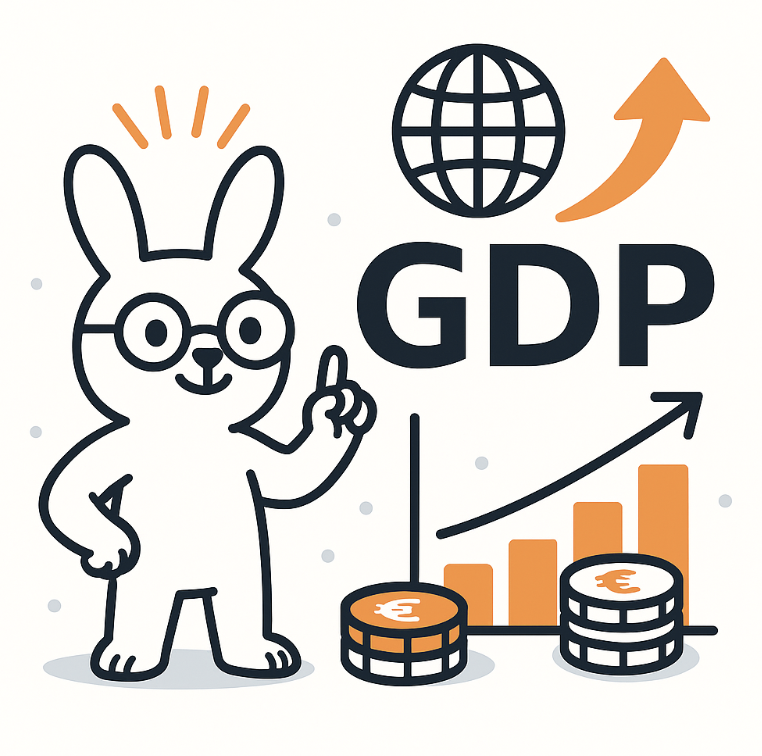
GDP works by adding up the value of everything an economy produces within its borders. The most common way to measure it is through spending, using the formula:
GDP = C + I + G + NX,
where C is consumer spending, I is investment, G is government spending, and NX is net exports (exports minus imports).
GDP can also be measured by adding all income earned in the economy or by totaling value added at each stage of production. All three methods reveal how much output the economy creates and how it changes over time.
GDP can feel heavy because it mixes formulas, measurement methods, and different components of spending. Alice turns your material into clear notes, summaries, and quizzes so you can quickly see how GDP is built up - from consumption and investment to government spending and trade. It helps you focus on the logic instead of getting stuck in the details.

Imagine that uou live in a country where students suddenly stop buying laptops, phones, and school supplies because prices have risen.
Cafés and restaurants near your campus cut staff because fewer students can afford to eat out, and businesses delay hiring graduates since demand is falling. At the same time, the government slows down new spending on student housing projects, and the country begins importing more than it exports. When you look at the GDP formula - C + I + G + NX - all these changes show up as lower consumer spending, reduced investment, slower government spending, and weaker net exports. Together, they pull down total GDP, signalling that the entire economy is slowing in a way that directly affects students’ daily lives, job prospects, and opportunities.

Real-world use
GDP shows whether an economy is growing, slowing down, or heading into a recession. Governments, businesses, and central banks rely on it to make key decisions.
Relevance
It helps you understand changes in living standards, economic performance, and how policy choices affect the overall economy.
Impact
GDP influences wages, job opportunities, interest rates, and government spending — shaping everyday life and long-term economic planning.
GDP measures the total value of all final goods and services produced in a country over a specific period. It captures the overall size and performance of the economy.
Real GDP adjusts for inflation, which makes it easier to compare output across different years. Nominal GDP can rise simply because prices increased, even if the country isn’t producing more.
Not necessarily. GDP doesn’t measure income distribution, quality of life, environmental conditions, or unpaid work. A growing economy can still have inequality or poor living standards for some groups.
Most countries measure GDP quarterly and annually. Early estimates are often revised as more detailed data becomes available, giving a clearer picture of economic performance.