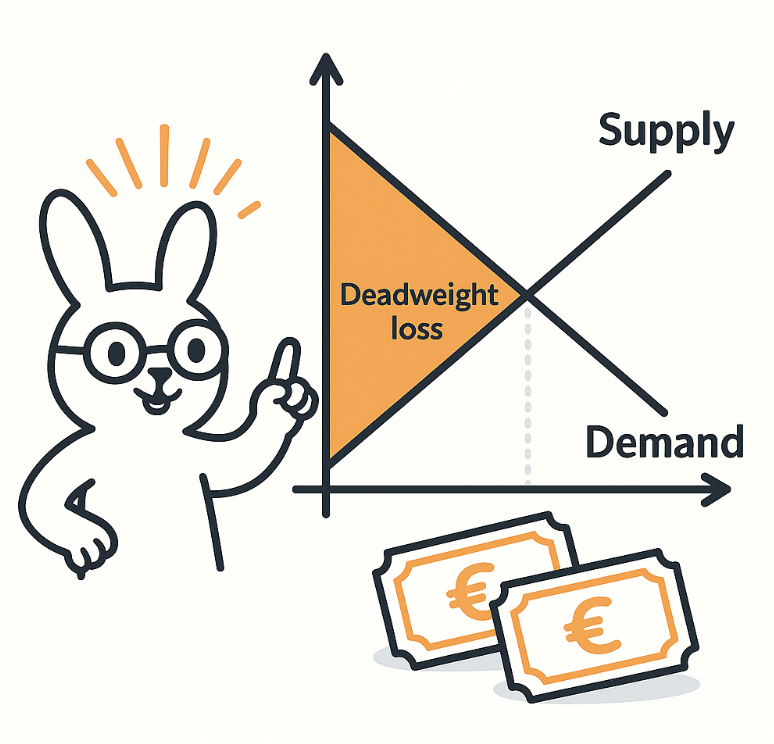
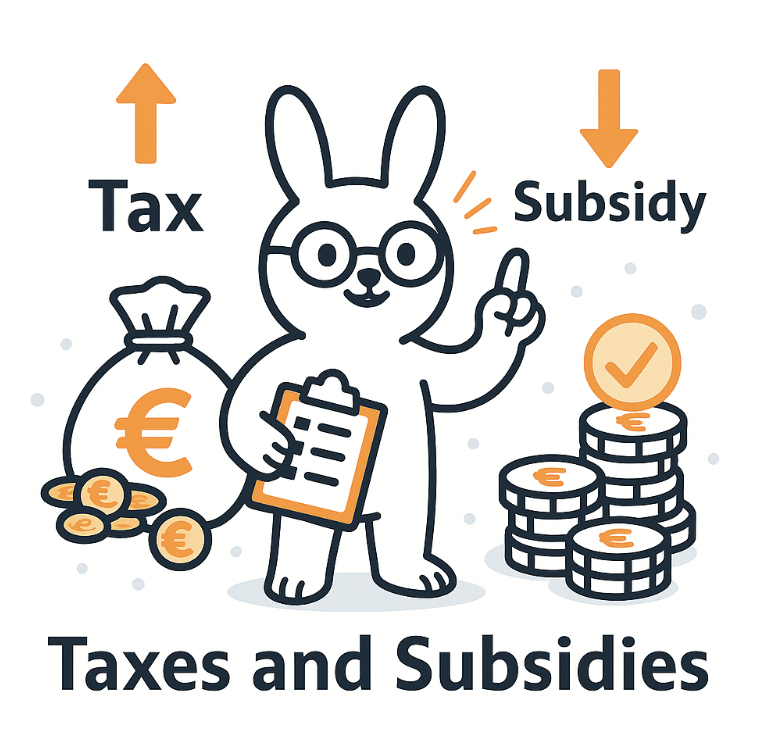
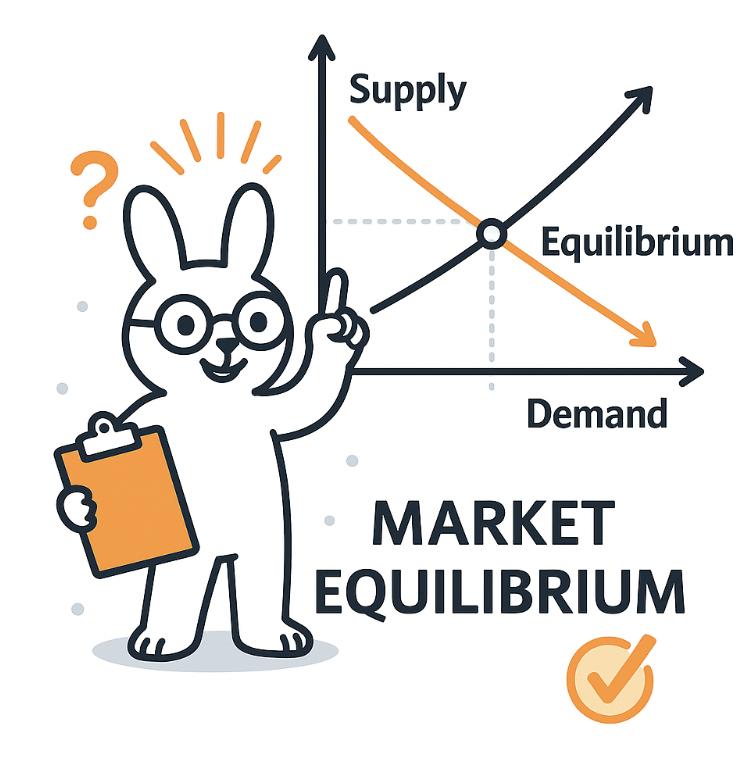
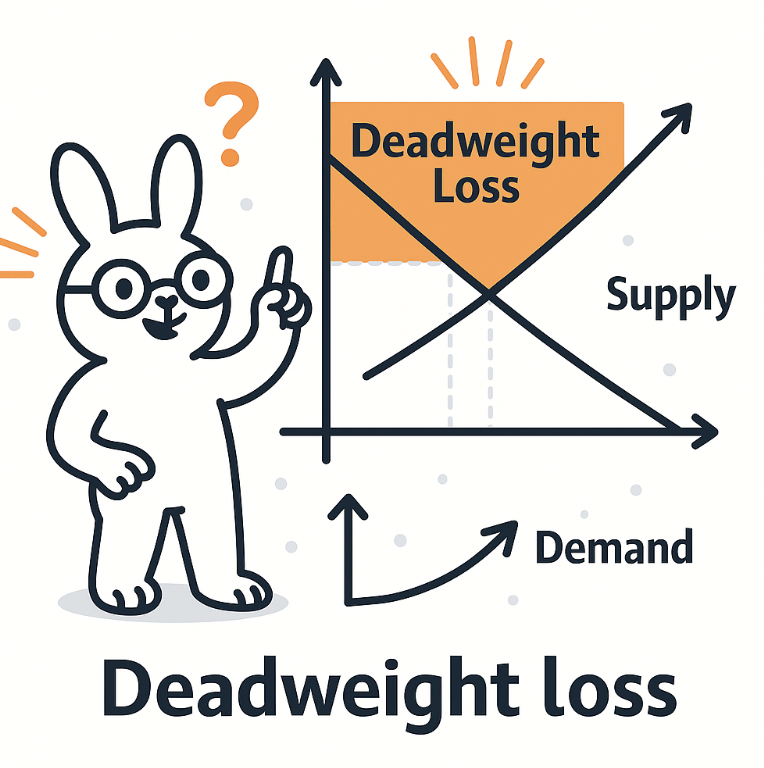
Deadweight loss happens when something prevents buyers and sellers from making trades they both would have benefited from. A tax, price ceiling, subsidy, or market restriction creates a gap between what consumers are willing to pay and what producers are willing to accept.
Because of this gap, some mutually beneficial transactions disappear - fewer people buy, fewer firms produce, and the market moves away from its efficient level. The value of those “lost” trades is the deadweight loss.

Deadweight loss can feel confusing because it mixes diagrams, lost value, and changes in equilibrium. Alice turns your material into clear notes, summaries, and quizzes, making it easier to see how different policies create these “missing” trades in the market. You focus on the logic instead of getting stuck in the curves and diagrams.

Imagine that a city adds a tax on concert tickets to raise revenue. Because tickets become more expensive, some people decide not to go - even though they would have enjoyed the concert and the venue would have been happy to sell the seats. Those “lost” trades that would have made both sides better off represent the deadweight loss.
The tax still brings in money, but the value from the people who now stay home is gone.

Real-world use
Deadweight loss helps explain why some policies - like high taxes or strict price controls - reduce economic activity and lead to wasted potential.
Relevance
It shows when markets are no longer producing at their most efficient level, helping economists judge whether a policy is costly or beneficial.
Impact
Understanding deadweight loss helps identify when society loses value, guiding better decisions about taxes, regulations, and market design.
Deadweight loss becomes largest when either demand or supply is very elastic. In those markets, even small taxes or restrictions cause big drops in quantity, meaning more mutually beneficial trades disappear.
No. It can also come from price ceilings, price floors, monopolies, subsidies, and other policies or market imperfections that push the market away from its efficient point.
Yes. Lowering or removing the distortion - like adjusting a tax or removing a price control - can shrink or eliminate deadweight loss by allowing more transactions to happen.
They calculate the value of the lost trades by looking at the triangle between the demand and supply curves after the market is distorted. It measures the benefit that would have existed if the market were operating efficiently.