Opportunity cost explained

Opportunity cost sounds complicated, but it’s just the idea that every choice has a trade-off. When you pick one thing, you’re automatically passing on something else - whether that’s time with friends, extra sleep, or a bit of money saved.

How opportunity cost works

Opportunity cost shows up the moment you face a choice with limited time, money, or energy. Instead of focusing on what you gain from the option you pick, your brain compares it to what you lose by not choosing the alternative. The process is simple: you look at your options, choose one, and the value of the option you didn’t take becomes the cost.

That “lost value” might be time, experiences, comfort, or progress - and it’s usually the part of the decision you don’t see at first. By becoming aware of this hidden trade-off, you start making choices more intentionally, because you’re not just picking what feels right in the moment - you’re weighing what each option quietly takes away.

How Alice could help

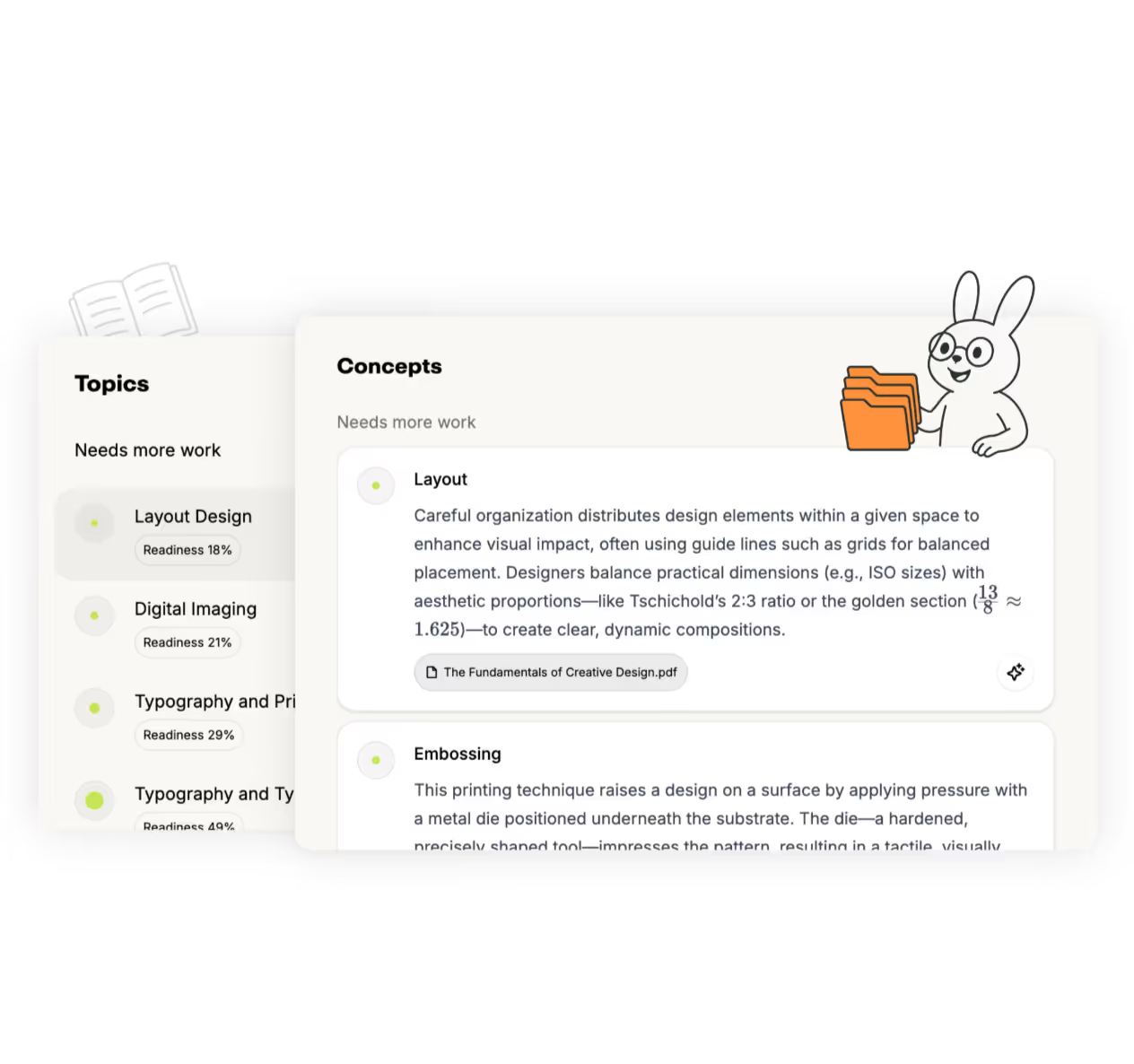
Alice takes concepts like this and turns them into something you can actually learn quickly. You can upload your microeconomics slides, notes, or PDFs, and Alice builds clear summaries, structured notes, flashcards, and practice quizzes for you automatically. Instead of rereading the same definition, you reinforce the concept through examples, questions, and spaced practice - which makes it stick. It’s a faster, easier way to study without doing all the heavy lifting yourself.

If you’re studying a topic like Opportunity Cost, that means you don’t just read the definition once - you redo it as flashcards, answer practice questions, test yourself under time pressure - and really absorb the idea instead of just re-reading it. Imagine the opportunity cost of not using Alice for your studies. It’s too high, right?

Try Alice for free

Example of an opportunity cost

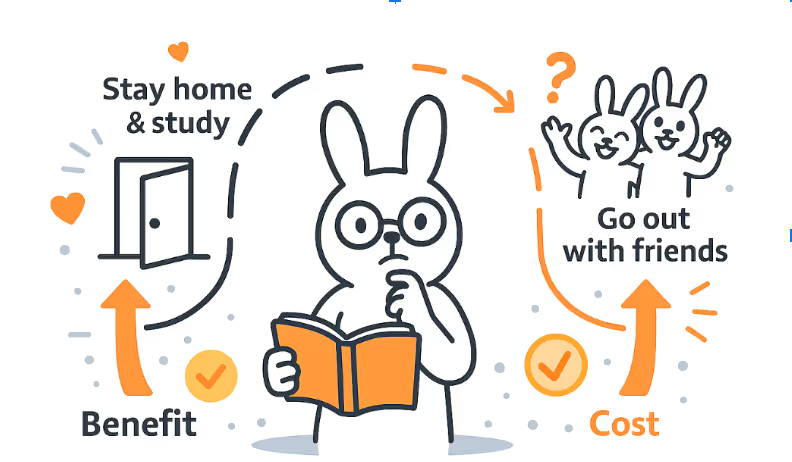
Imagine it’s Sunday evening, and you have two options:go out with friends or stay home and finish your assignment.

If you choose to go out, the benefit is obvious - you get to relax, laugh, and forget about school for a while. But the opportunity cost isn’t just “time spent.” The real cost is what you lose by not staying home: finishing your work early, getting a good night’s sleep, and starting Monday without stress.

Now flip it.

If you stay home to work, the opportunity cost isn’t “studying.” The true cost is the fun night you miss - the inside jokes, the social time, the memories.

Neither option is “wrong.” What matters is which value means more to you right now.That trade-off - the value of the option you didn’t choose - is the cost you’re actually paying.

Why opportunity cost matters

1. Real-world use

It shows you the trade-offs behind everyday decisions, like whether a study session is worth more to you than taking a break.

2. Relevance

It gives you a clearer way to compare options, so you don’t just choose what’s easiest - you choose what’s most valuable.

3. Impact

By using this perspective, you become more effective. You manage your time better and understand how your choices influence your results in the long run.

Key concepts in microeconomics

Still have questions?

Is microeconomics hard to learn?

It can be challenging at first because there are new concepts, graphs, and formulas. But once you understand the patterns, the subject becomes much clearer. That’s one of the reasons we built Alice - to help students turn complicated topics into simple explanations, summaries, and practice questions so studying microeconomics feels way less overwhelming.

How can I understand opportunity cost more easily?

Start by applying it to simple decisions in your own day - choosing between sleep and study, saving or spending, working or resting. If you want more support, you can upload your class notes to Alice and get clear explanations, practice questions, and flashcards that make the concept much easier to grasp.

Why is opportunity cost important in economics?

Because it helps compare options when resources are limited. Economics uses it to explain how people and businesses make choices when they can’t do everything at once - which is exactly the same challenge students face with time and money.

How can Alice help me learn opportunity cost more effectively?

You can upload your class material to Alice, and it’ll turn everything into short summaries, quizzes, and flashcards. Seeing the idea explained in different ways - especially using examples from your own course - helps you remember it without rereading the same notes over and over.

Ready to learn about opportunity cost with Alice?

Alice helps you organise your material into concepts which you can practice on to understand them better
Try it for free today