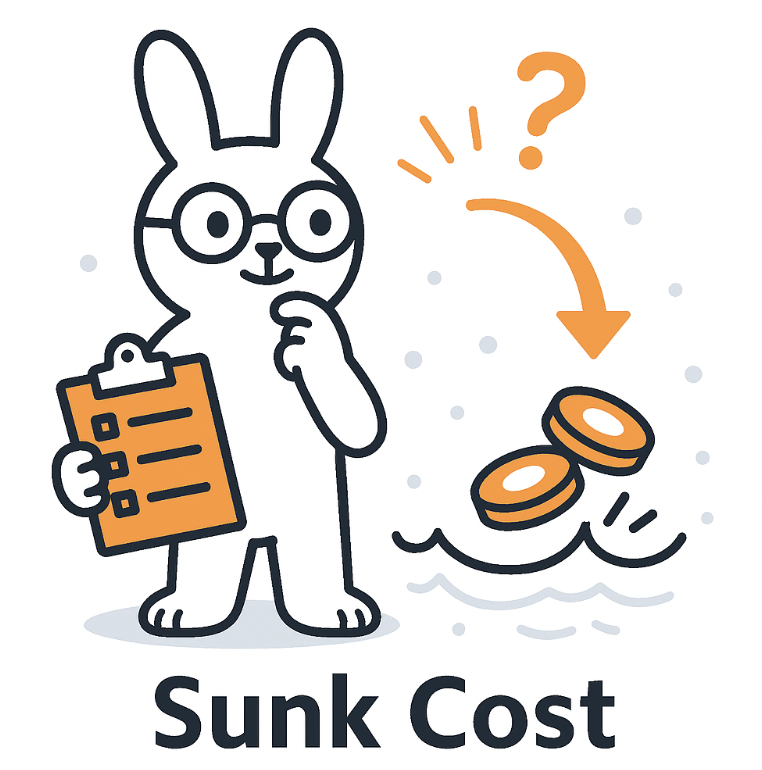
Sunk cost

Sunk cost is the money, time, or effort you’ve already spent - and can’t get back - no matter what you choose next. The trap? Letting past investments control future decisions. Economics teaches you to ignore sunk costs and focus on what actually matters: the benefits and costs from this point forward.

How sunk cost works

A sunk cost becomes a problem when it starts shaping what you choose next. It begins with an investment of time, money, or effort. Once that investment can’t be recovered, you face a new decision. Instead of judging the options by what they can bring you in the future, you might stick with the original choice simply because you’ve “already spent so much.”

That’s the core mechanism.

Economically, sunk costs should have no influence on future decisions. What matters is which option improves your situation from this point forward.
How Alice could help

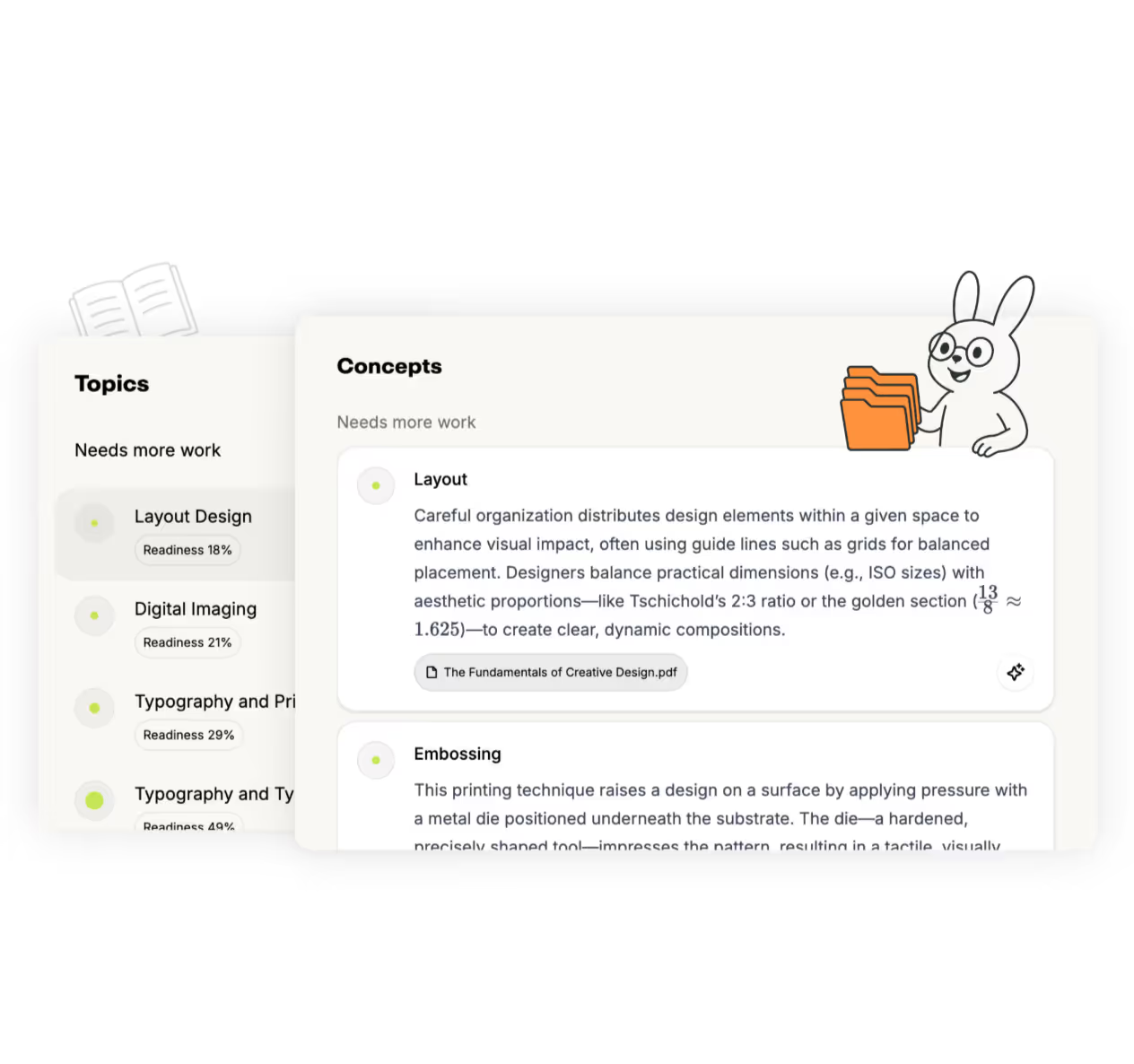
When you’re studying, it’s easy to fall into the sunk-cost trap - spending hours on notes or rereading material just because you’ve “already put so much time into it.” Alice helps you avoid that.

Instead of doubling down on study methods that don’t work, Alice turns your material into clear notes, summaries, and quizzes in seconds. You can quickly see what actually helps you learn and shift your time toward the things that move you forward.

Alice keeps your study process efficient, so you stop wasting effort and start improving faster.

Try Alice for free

Example of sunk cost

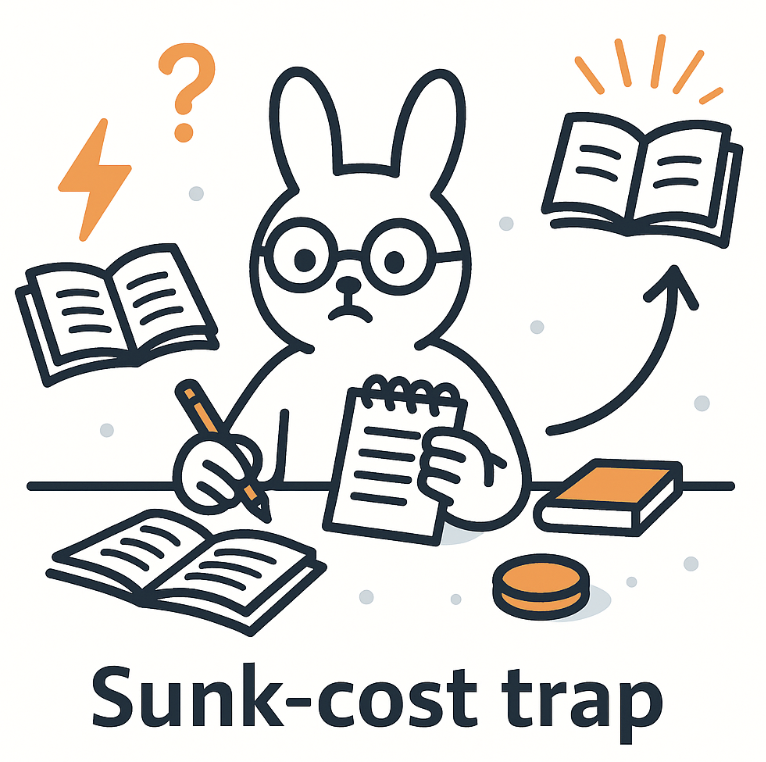
Imagine that you’ve spent three weeks preparing notes for a study method that isn’t helping you understand the topic any better. Even though you’ve put in a lot of effort, the rational choice is to switch to a better method now, because the time you spent can’t be recovered.

That’s the sunk-cost trap: past effort pulls you in, even when changing direction would give you a better outcome.

Why sunk cost matters

Real-world use

Sunk cost bias shows up in school, work, and everyday decisions - like continuing a project or sticking to a plan simply because you’ve already spent time on it.

Relevance

Ignoring sunk costs helps you make cleaner, more rational choices by focusing on future gains instead of past effort.

Impact

Avoiding the sunk-cost trap saves time, reduces wasted energy, and leads to better outcomes in both academic and personal decisions.

Key concepts in microeconomics

Still have questions?

How do I know if I’m falling into the sunk-cost trap?

A good signal is when your reason for continuing something is mostly based on what you’ve already spent - not what you’ll gain going forward. If “I’ve already put so much into this” is driving the choice, it’s likely a sunk-cost moment.

Do sunk costs apply to studying and school decisions?

Yes. Students often stick with ineffective study methods, unnecessary notes, or long projects simply because they’ve spent time on them. The economic idea helps you shift toward what actually improves your performance now.

Are sunk costs always bad?

Not necessarily - they’re just irrelevant for future decisions. The danger comes when they influence the choice. You can acknowledge past effort without letting it control what you do next.

How is a sunk cost different from an investment?

An investment still has potential future value; a sunk cost doesn’t. Once the cost can’t be recovered or produce a future payoff, it becomes sunk - and should stop influencing your decisions.

Try alice, avoid the sunk-cost trap

Studying shouldn’t feel like you’re stuck with methods that don’t work just because you’ve already spent time on them.
Try it for free today