Diminishing marginal returns

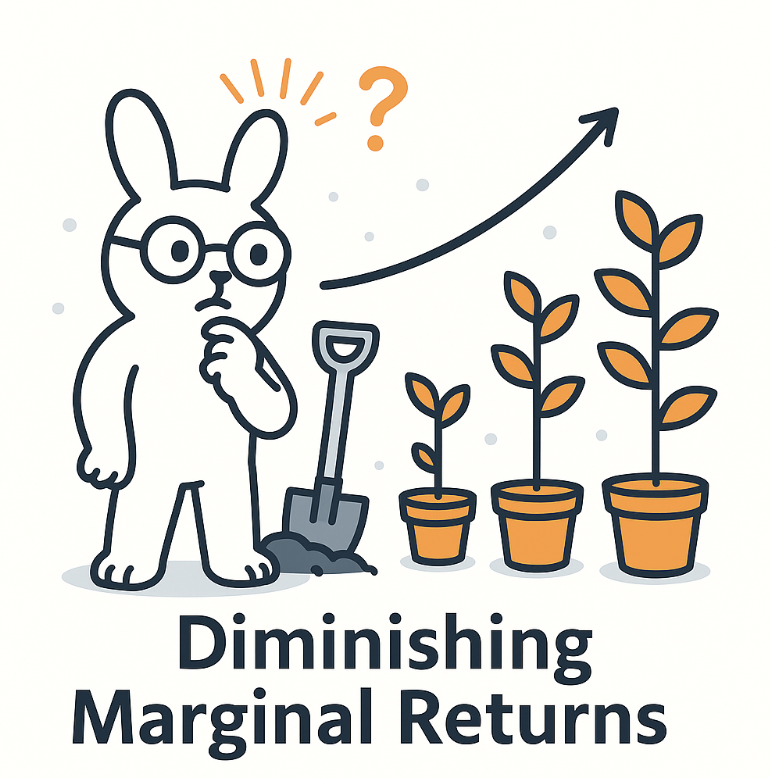
Diminishing marginal returns describe what happens when adding more input - like workers, time, or resources - produces less and less extra output. At some point, every additional unit contributes less than the one before, even if you keep investing the same amount.

How diminishing marginal returns work

When you keep adding more of one input while holding everything else constant, the extra output you get from each new unit eventually starts to fall. At first, productivity can rise quickly, but after a certain point the workspace gets crowded, resources get stretched, and each additional worker or hour adds less to total output.

Economically, this turning point is where diminishing marginal returns begin - the input keeps increasing, but the added benefit keeps shrinking.
How Alice could help

Diminishing marginal returns show that piling on more study time doesn’t always lead to better results. Alice helps you avoid that drop-off by turning your material into clear notes, summaries, and quizzes, so you can focus on the study moments that actually boost your learning instead of pushing through low-value hours.

Try Alice for free

Example of diminishing marginal returns

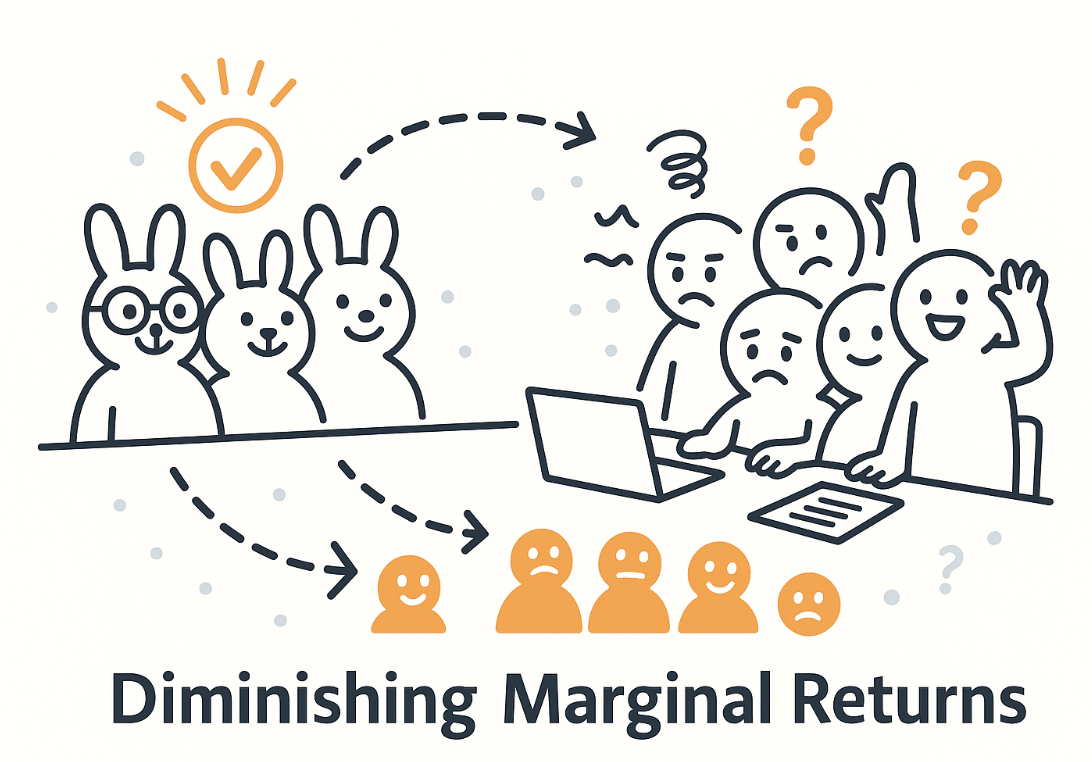
Imagine that you’re working on a group project with two friends, and everything runs smoothly. When a fourth and fifth person join, progress speeds up - but when the group grows to eight people, discussions get messy, tasks overlap, and each new person contributes less than the one before.

That’s diminishing marginal returns: adding more input still increases output, but the extra benefit gets smaller each time.

why diminishing marginal returns matters

Real-world use

It explains why adding more workers, hours, or resources doesn’t always increase output at the same rate, especially when space or equipment becomes limited.

Relevance

Businesses use it to decide how much to produce, how many employees to hire, and when extra investment stops being efficient.

Impact

Understanding diminishing returns helps avoid wasted resources and encourages smarter decisions about scaling, productivity, and workload.

Key concepts in microeconomics

Still have questions?

Why do diminishing marginal returns happen in the first place?

Because fixed resources - like space, tools, or equipment - eventually limit how productive additional inputs can be. At some point, each new worker or hour simply has less room or fewer resources to work with.

Is diminishing marginal returns the same as getting worse results?

Not exactly. Output is still increasing, just at a slower rate. The extra gain shrinks, but total production can continue to grow.

How does diminishing marginal returns show up outside of economics?

It appears in studying, fitness, and even teamwork. The first hours or efforts give big improvements, but repeating the same action eventually brings smaller gains.

Can diminishing marginal returns be avoided?

Sometimes. Increasing capacity - like adding more space, better tools, or improved systems - can delay the point where returns start to fall, but it can’t remove the effect entirely.

Try Alice, study without hitting diminishing returns

When extra study time stops adding much value, Alice helps you refocus. It turns your material into clear notes, summaries, and quizzes.
Try it for free today