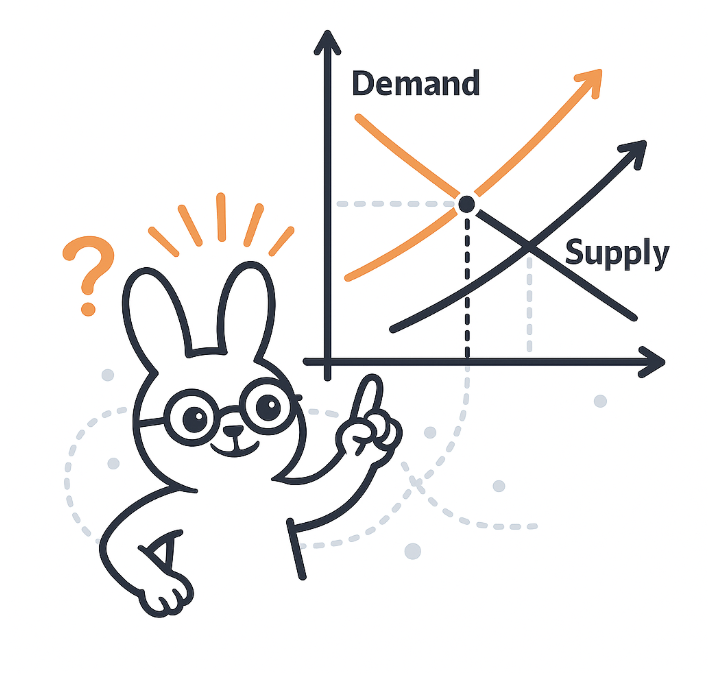
In a perfectly competitive market, no single firm can raise its price because buyers can instantly switch to identical products from other sellers. The market sets one price for everyone, and each firm decides how much to produce by comparing that price to its costs.
If the market price is higher than the firm’s marginal cost, the firm produces more; if it’s lower, the firm produces less. Over time, new firms enter when profits are high and leave when profits fall, pushing the market toward a long-run equilibrium where firms earn exactly normal profit - no more, no less.
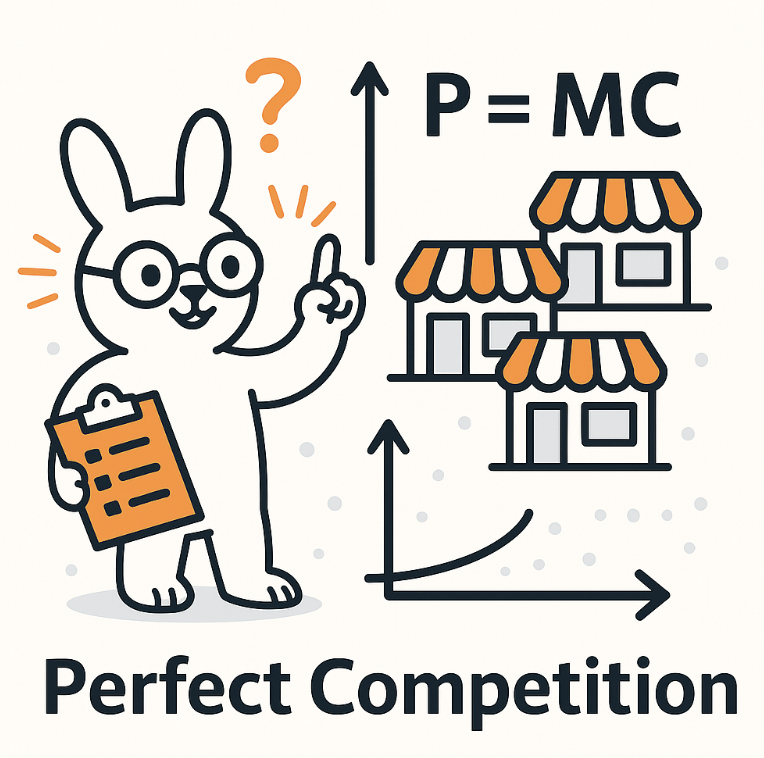

Perfect competition involves diagrams, cost curves, and decisions based on marginal thinking - which can get confusing fast. Alice turns your material into clear notes, summaries, and quizzes, helping you see why firms are price takers, how they choose output, and how entry and exit affect profits. You spend less time stuck on graphs and more time understanding the logic behind them.

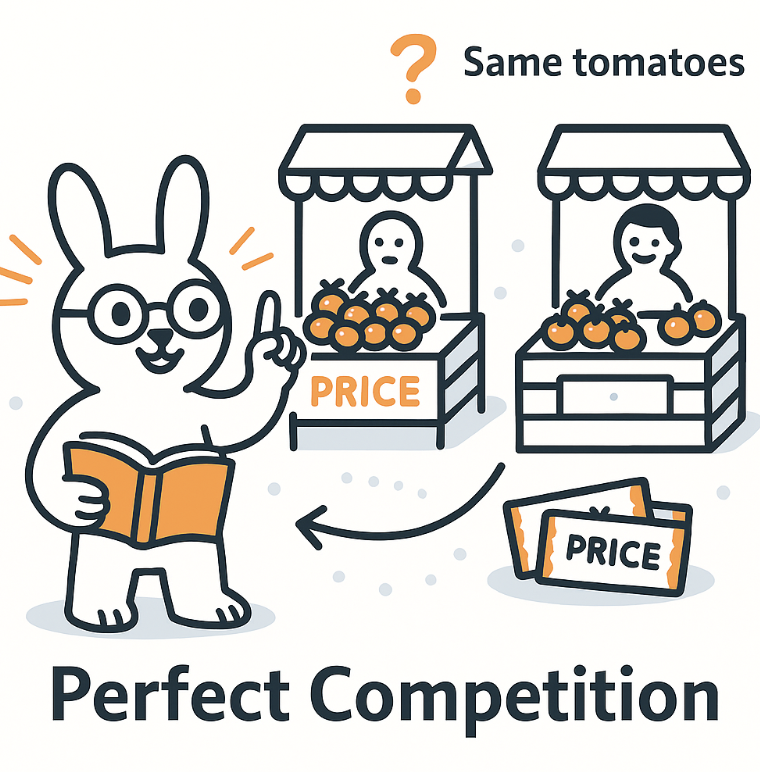
Imagine that you go to a farmers’ market where dozens of sellers offer the exact same type of tomatoes. No seller can charge more than the market price - if one tries, buyers immediately walk to the next stall. Every seller accepts the price set by supply and demand and focuses only on how many tomatoes to bring.
That’s perfect competition: many sellers, identical products, and no power to change the price.

Real-world use
Perfect competition helps explain how markets behave when products are identical and information is easy to access - like agricultural goods or basic commodities.
Relevance
It’s the foundation for understanding price-taking behavior, efficient markets, and how firms decide how much to produce based on costs and market prices.
Impact
Perfect competition shows what an “ideal” efficient market looks like, making it easier to compare and understand real-world markets that behave differently.
Many small firms, identical products, free entry and exit, and full information. These conditions ensure no single firm can influence the price.
Because buyers can instantly switch to identical products from other sellers. If one firm raises its price, customers leave, so the firm must accept the market price.
Not perfectly, but some markets come close - like basic agricultural goods, foreign exchange markets, and certain online product listings where products are nearly identical.
In the short run, firms can earn profit if the market price is above their average cost. But in the long run, new firms enter, pushing the price down until all firms earn normal profit.