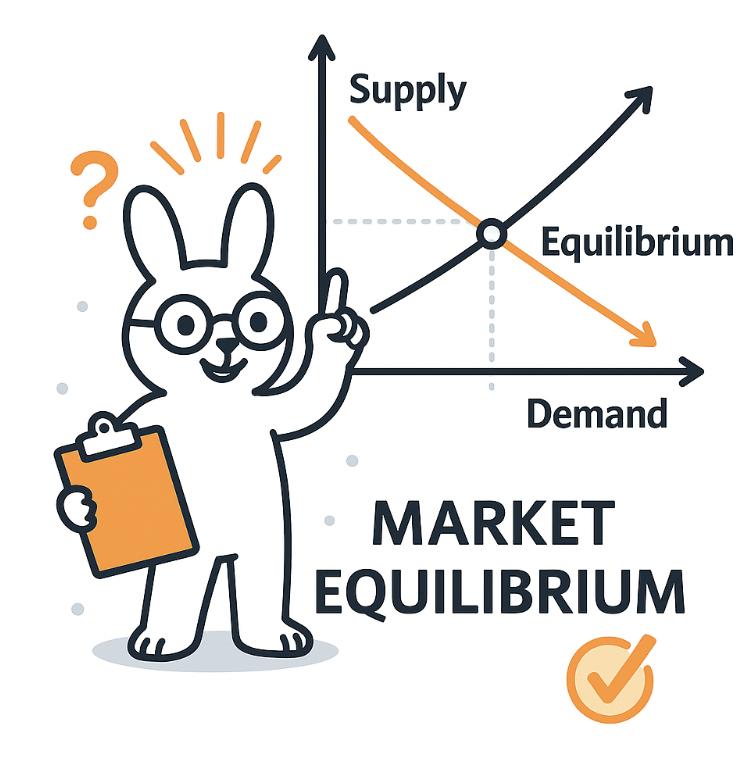
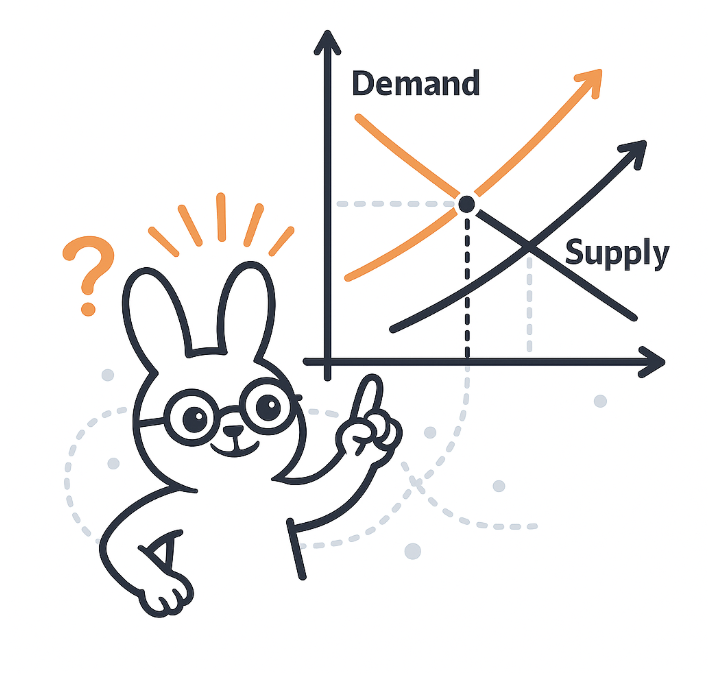
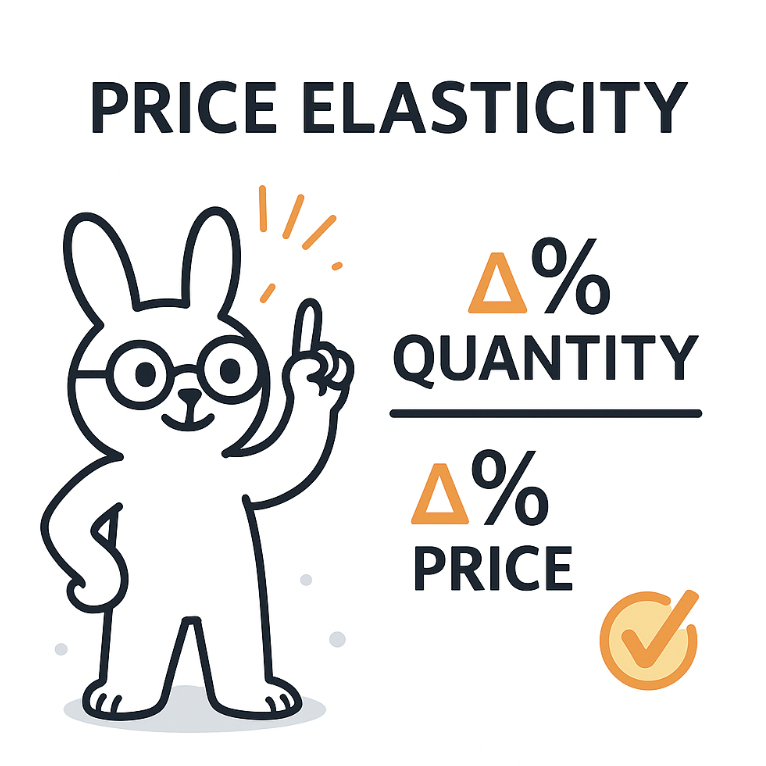
Price elasticity of demand is a way to measure how much the quantity demanded changes when the price changes. It shows whether consumers react strongly, weakly, or barely at all to a price increase or decrease. The elasticity value tells you the size of that reaction, nothing more. It’s a tool for describing how responsive demand is to price shifts.

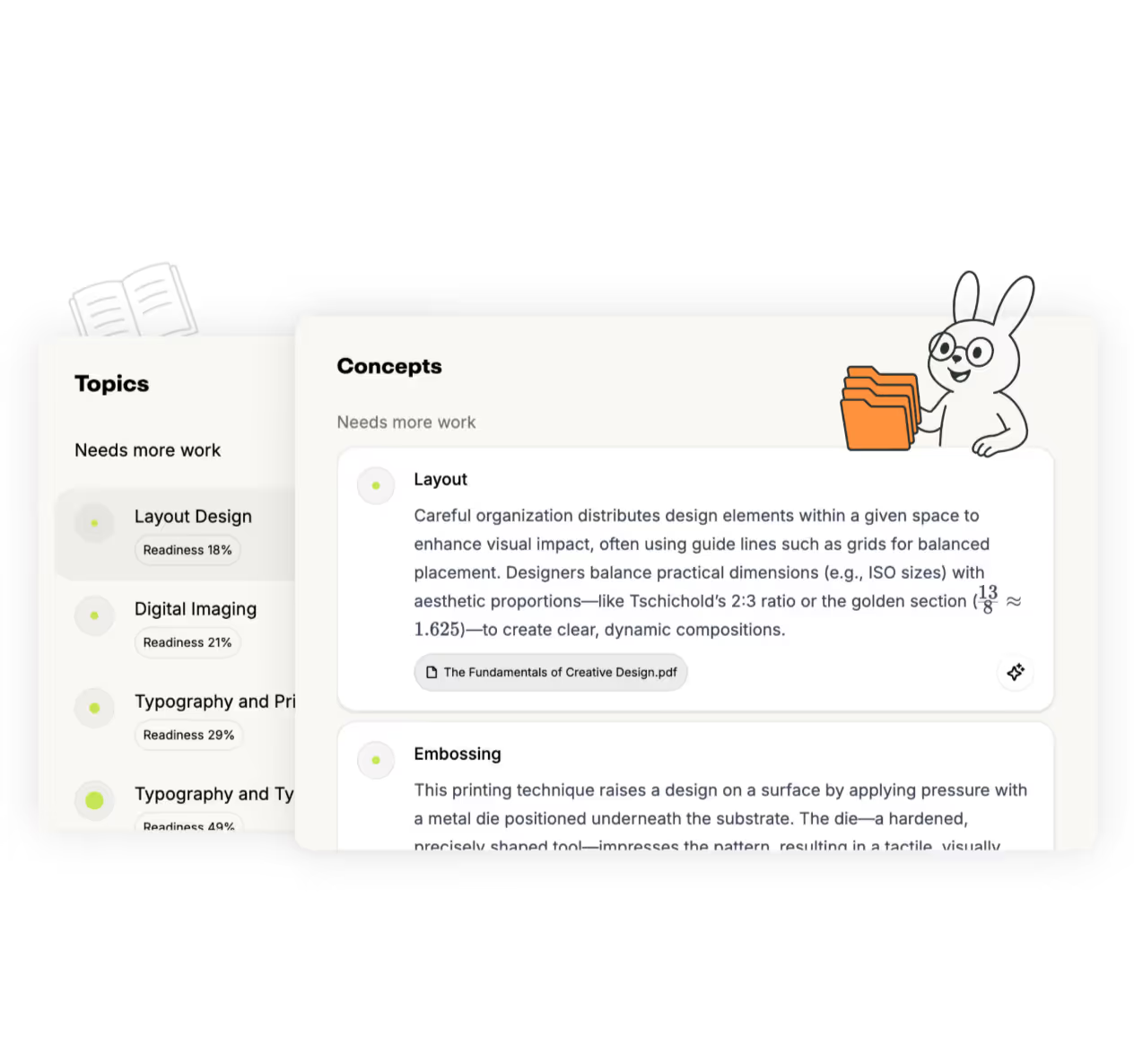
Understanding elasticity becomes much easier when your material is actually organized. Alice does that for you. Just upload your lecture slides or notes, and Alice turns all your scattered content into a clear structure of topics, definitions, and key formulas. Instead of digging through endless slides, you get everything laid out in a way that helps you see how the ideas connect.
Once your material is organized, you can practice elasticity questions, test yourself in Exam Practice mode, and get instant feedback on how well you understand the concept. Alice even gives you a grade estimate based on your performance, so you always know exactly where you stand before the real exam.

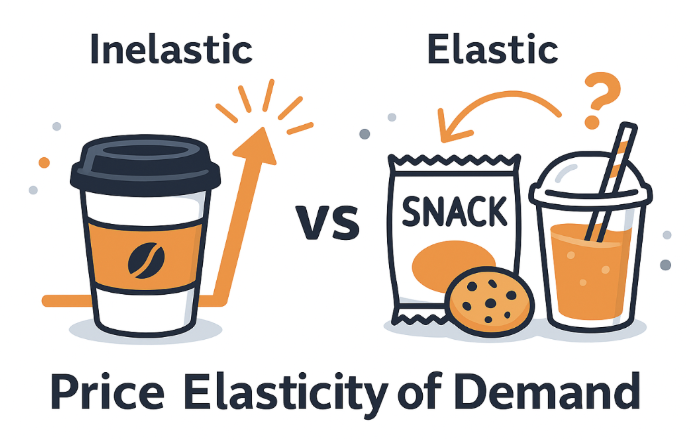
Think about buying your morning coffee on campus. You have a pretty clear idea of what you’re willing to pay. If the price goes up just a little, you’ll probably still buy it because you really want that caffeine. Your willingness to pay is high, so a small price increase doesn’t change your behavior. That’s inelastic demand.
Now compare that to a snack you like but don’t really need, like a protein bar or a smoothie. You have a lower willingness to pay for those. If the price increases even a bit, you might skip it, switch to something cheaper, or buy it less often. Demand drops quickly because you’re less attached to it. That’s elastic demand.
Both situations show the idea clearly:
students are willing to pay more for things they really value, and much less for things they only buy when the price feels right. Price elasticity is simply a way of measuring that difference.
Real-world use
Elasticity explains why the price of something like a morning coffee can rise without losing many customers, while a small price increase on streaming subscriptions can cause people to cancel. It also shows why stores discount pastry at the end of the day or why flight prices jump when holiday season comes around.
Relevance
Once you understand elasticity, the reactions you see in different markets make sense. You can tell which products people will keep buying no matter what and which ones they’ll immediately cut back on if the price goes up.
Impact
This concept helps businesses avoid pricing mistakes that scare customers away. For students, it makes later topics like revenue, taxes, and market behavior easier to understand because you already know how consumers respond to price changes.
Demand becomes elastic when buyers have alternatives, don’t need the product urgently, or feel the price is no longer worth it. It becomes inelastic when the product is essential, hard to replace, or personally important. Students experience this every day with food, transport, and subscriptions.
Optional items like bubble tea, snacks, or streaming subscriptions tend to be elastic because students reduce their consumption when prices rise. Essentials like textbooks, bus passes, or medicine are usually inelastic because people buy them even when the price goes up.
It helps explain why businesses change prices the way they do and why some price increases barely affect sales while others cause demand to drop fast. For students, it’s a core concept that connects to revenue, taxation, efficiency, and many other topics later in economics.
Elasticity gets easier when your material is structured in a way that actually makes sense. You can upload your notes or slides to Alice, and it organizes everything for you and builds a clear overview of the topic. You can then practice elasticity questions in Exam Practice mode and get instant feedback and a grade estimate, so you know exactly how well you understand the concept before the exam.