Production possibility frontier

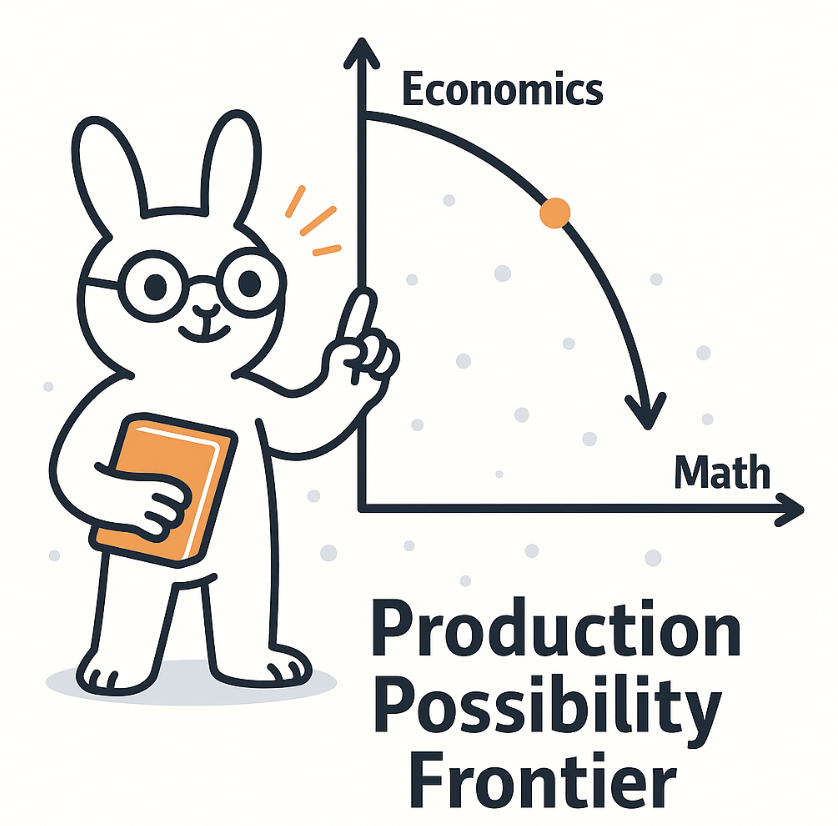
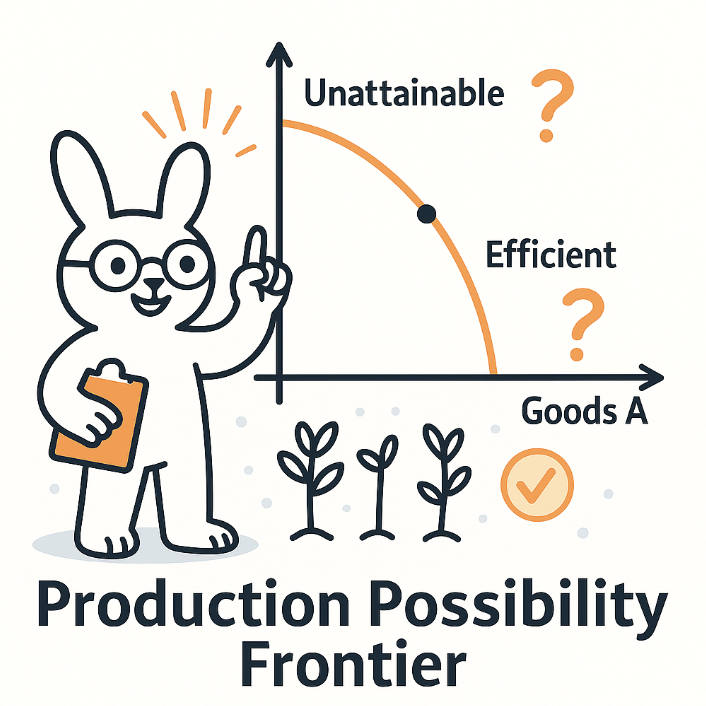
The production possibility frontier (PPF) shows the trade-offs an economy faces when choosing how to allocate limited resources. It highlights how producing more of one good means producing less of another - and how efficiency, scarcity, and opportunity cost shape those choices.

How the production possibility frontier works

The PPF works by showing what happens when you shift resources from one activity to another. As you move along the curve, you “give up” some of one good to produce more of another. At first the trade-off may be small, but as you keep shifting resources, producing extra units becomes harder - and the cost of choosing one option over the other increases.

It’s a way of visualizing real choices: limited time, limited materials, and the need to decide what combination gives the best outcome.
How Alice could help

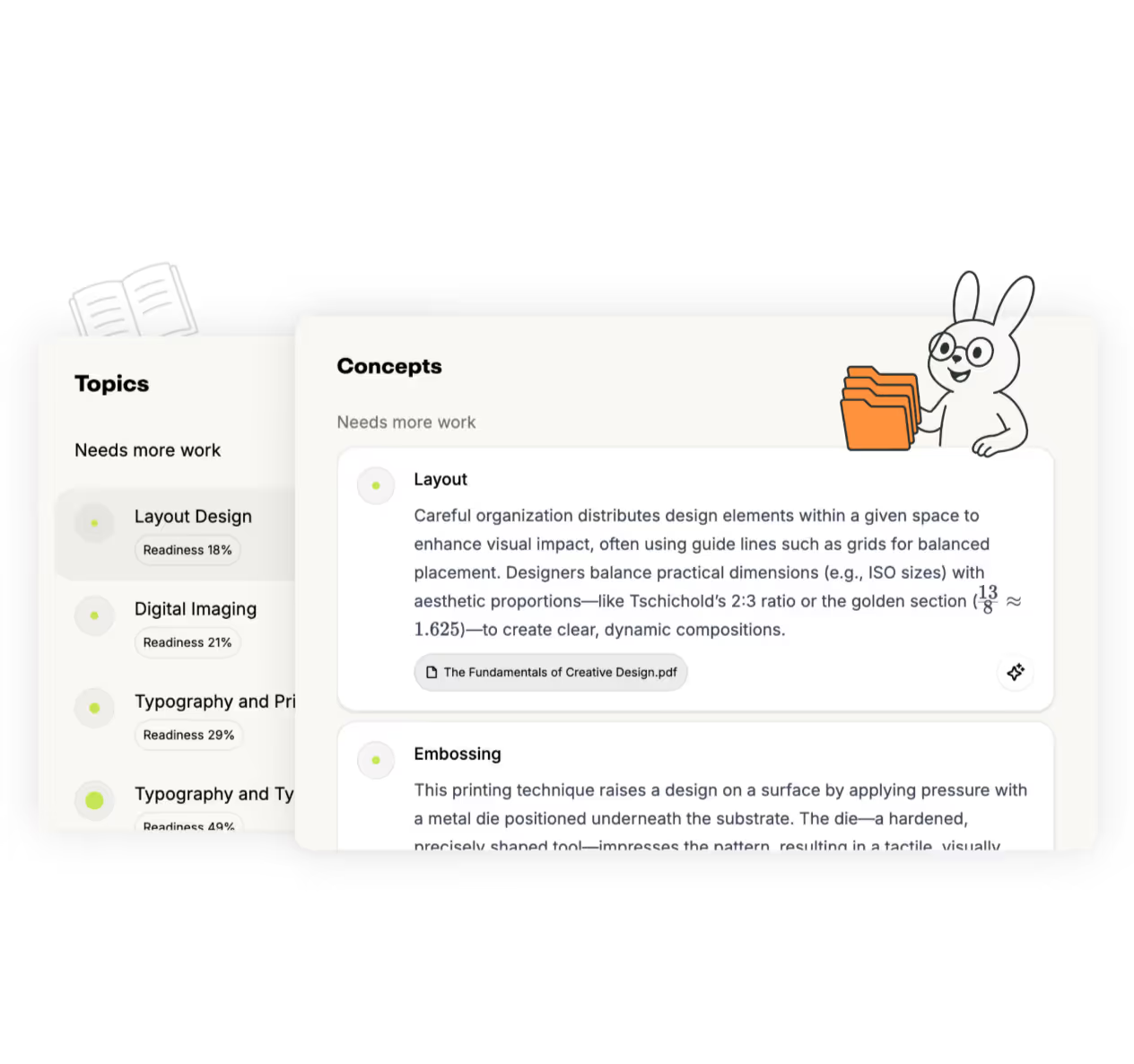
The PPF is all about choosing the best use of limited resources - and studying works the same way. Alice helps you spend your study time where it actually makes a difference by turning your material into clear notes, summaries, and quizzes. Instead of spreading your effort too thin, you can focus on what gives you the highest payoff.

Try Alice for free

Example of PPF

Imagine that you have a weekend to split between studying for two subjects: economics and math. If you spend more time on economics, your math revision suffers - and if you shift more hours to math, your economics prep decreases. There’s no way to maximize both at the same time because your time is limited.

That trade-off creates your own personal PPF: every extra hour spent on one subject comes at the cost of progress in the other.

Why the production possibility frontier matters

Real-world use

The PPF helps explain how countries, businesses, and even students make choices when they can’t do everything at once. It shows the trade-offs involved in allocating limited time, money, or resources.

Relevance

It’s central to understanding opportunity cost, efficiency, and how economies grow or slow down depending on how well they use their resources.

Impact

The PPF helps identify when resources are being used effectively and when they’re being wasted, making it easier to make smarter, more balanced decisions.

Key concepts in microeconomics

Still have questions?

What does a point inside the PPF mean?

It shows that resources aren’t being used efficiently - the economy could produce more of one or both goods without needing extra inputs.

Why is the PPF usually curved instead of straight?

Because resources aren’t equally good at producing every good. As you shift resources, the opportunity cost increases, which creates the curve.

Can the PPF shift over time?

Yes. It shifts outward when an economy gains more resources, improves technology, or becomes more productive - meaning it can produce more overall.

How can students use the PPF idea in real life?

It’s a helpful way to think about study time. Tools like Alice make it easier to see which tasks give the biggest payoff, so you can allocate your time more efficiently instead of spreading yourself too thin.

Try Alice, make the most of your study resources

The PPF shows that you can’t do everything at once - especially when time is limited. Alice helps you focus on the parts of your material that give you the highest payoff by turning it into clear notes, summaries, and quizzes.
Try it for free today